Sustenance…what gives Life to your life?

Solidarity Thursdays
Thursday, December 6th 2012
Question Enso

Sustenance…what gives Life to your life?

There are more than a few ways to look at sustenance and what it means in our lives, I suppose.

Fuel for life…

The most basic way to look at sustenance, and yet no less important than any other way – in fact most important when in relation to our biology – is food. We have all heard the numbers. Unless you’re Gandhi (who quite famously survived a near starvation fasting of 21 days without food at the age of 77) most people can only make it two weeks without food. And we diminish even more quickly without water. Although there are always exceptions based on one’s general health and outside factors like climate, etc. – in general, most people cannot make it any longer than a week without water. It is interesting isn’t it? We are mostly made of water, yet we are unable to retain or store it. We are in a somewhat constant state of needing to replenish it. We are built to be in a constant state of want, of need, of assistance. We are not able to survive, biologically, independent of other life. We need water and food to survive; we need water and food to sustain biological life.

And although it will not be the focus of my blog today, I would be remiss to not mention the impact this need has on the geo-political landscape – what it means for this world to have resources unevenly distributed – what it means to the world to have so much poverty and famine, for some to have so much and for others to have so little. It is important that we ask ourselves, “What do I need to biologically, to chemically, sustain this life?”

We should reflect on our consumption. Perhaps, to dump the two terms – sustenance and consumption – into our melting pot minds and swirl them around a bit. The very few of us (by world population standards), consume much much more than we need to sustain our lives biologically. And even though it is uncomfortable to recognize this, it is important to be aware that our over consumption has a cost – loss of life elsewhere. Life consumes life. This isn’t a guilt trip. We should feel gratitude that we live where we live, to have been born in a region of such privilege. This should also produce some humility, knowing we didn’t cause ourselves to be born into a country of such privilege. But I think it is healthy and beneficial to recognize, while some others are just barely sustaining their life with a few spoonfuls of rice and grain a day, we tell ourselves that we need a Venti at Starbucks, because a Grande or Tall just doesn’t cut it. (confessional: I’m guilty of this) It is also important to become aware of what this need of others, and imbalance of resources does to our heart. Are our hearts called to compassion as we see so many suffer under famine caused by drought or oppression? If we are lovers of peace, are we able to recognize that this imbalance, these conditions of starvation and famine, often lead to unrest and violence? This isn’t just for followers of Jesus (who, perhaps, was most clear on this proclamation); it is true for anyone with or without a spiritual practice: if we want to be authentically and fully human, we must align ourselves with the poor.

After all, we don’t live on bread (or water) alone…

So your belly is fat and you are happy, now what? You don’t have to look far to see statistics that even in this fast-paced land of plenty we suffer from multiple health issues and have had a rise in anxiety and depression. Something is missing. To paraphrase the well known and celebrated Zen Master, Thich Nhat Hanh – A tree is simply content with being a tree. A tree doesn’t try to be anything else, it just is. LightColorTree2 (2)We aren’t trees and don’t seem to be content with just being (perhaps, we’ll get there some day). There seems to be a deep yearning and desire within us for meaning. The great wrestling with God, the existential questioning that we humans seem to be a unique in experiencing here on this tiny blue planet. We are often and consistently asking ourselves what it means to be human, why are we here, where did we come from, etc. etc. We are always asking each other upon meeting, what it is that we do. We set off to colleges and universities to find what it is we want to do with our lives….and it better be successful (whatever that means). One might say that we should change our name to human-doers rather than human-beings.

And we often find ourselves and find great value, meaning, and insight from what we do and what we experience. We find what keeps us going, what inspires and motivates us in life, we become aware of what sustains us. Perhaps it is our art. I think the majority of artists would indeed feel like they have died, if they were unable to create. Perhaps it is our romance. Having a broken heart, always feels like death. You should try it, it is good practice.

For what it is worth, we seem programmed to eat from the Tree of Knowledge and leave the Garden. We have to leave, to return. We have to Fall, to Rise again. There is no fault here, no mistake. It is a journey into God, into Life, into Love, into one’s Self. It is written upon the heart…so it is good to wrestle with these questions, to set off on the quest. It is good to listen for that calling and to search out meaning. For many of us, this is what sustains us – this is our sustenance – our art, our love, our passion. It is what keeps us going.
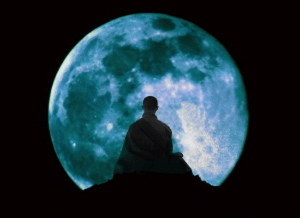
monkmoon

The fingers are not the Moon…

There is a Zen story of the Sixth Patriach Huineng who in talking to a nun about the meaning of things, said, “Truth has nothing to do with words. Truth can be likened to the bright moon in the sky. Words, in this case, can be likened to a finger. The finger can point to the moon’s location. However, the finger is not the moon. To look at the moon, it is necessary to gaze beyond the finger, right?”

So what does sustain us? What is our sustenance? It can be said that all of the things above are such. Food and water sustain our bodies, keeping our mechanics in motion. Our passion, our desire, our searching fuels our spirit and keeps us living, and gives meaning to our life…but these are simply fingers and not the Moon.

You have to find the Moon for yourself. Each of us does. However, I will share what I believe the Moon is for me.

I do believe that the underlying sustenance, that which sustains us, is in fact the quest to be like the tree, to be. To be known, to be understood, to be loved as we are without having to achieve, having to impress, having to earn. While doing may fuel the spirit, it is in being that the soul finds its rest and peace.

So would it help if I simply said to you
that you are okay,
that you are already complete
and Whole?

Would it give you comfort and rest,
to know that you have
nothing to earn or achieve –
that you are beautiful as you are,
that you are understood and loved?

Would it fulfill your purpose and life
to know that you are,
like the tree,
in your own way,
uniquely rooted in the rich soil of this earth?

and yet so exquisitely,
like the tree,
stretched toward the warmth
of the Sun?

I did not think so.

So, journey on, beloved friends
And may those fingers,
perfect as they are,
point you to the Moon…

For more reading on this Solidarity Thursday topic, please check out these wonderful blogs: Ben at The Horizontalist, Esther at Church in the Canyon, and with a unique perspective, Triskaidekapod.

fasting ~ the practice of letting go…

Solidarity Thursday
Thursday, November 15, 2012

“Stop, look around, and see how wonderful life is: the trees, the white clouds, the infinite sky. Listen to the birds, delight in the light breeze. Let us walk as free people…”
~ Thich Nhat Hanh

Fasting…

I was raised Lutheran, which is a denomination of the Protestant branch of Christianity. If Episcopalians are “Catholic light”, then we were even a bit “lighter” with just a few Sacraments short of the full deal. Nonetheless, giving up something for the Lenten season was a pretty regularly encouraged practice, though not rigorously enforced. It is the season of fasting bookended by Ash Wednesday at the beginning and ending with Holy Thursday or Easter Eve in some cases. It is about a six week or 40 day period to commemorate the 40 days Jesus spent in the desert. We would “fast” or give up something important to us during this period. Adults often gave up drinking alcohol and perhaps other “vices” during this time. As children, we often gave up candy or dessert or some other thing that made us resent the whole practice, leading us to see it mainly as a way for adults to oppress us further…what did candy ever do to anyone?! Just because Jesus didn’t have dessert in the desert, why can’t I? In any case, at the very least, Lent would provoke a roll of the eyes if not a fully committed grimace. Why does God want me to do without? How is this, an act of worship?

What? There’s a practical purpose to this nonsense?..

It wasn’t until the end of my early early adulthood that I began to see the subtle genius in fasting as a practice. It takes time to break habits. It takes time to create habits. There are many differing opinions regarding how long it takes to break or create a habit. It can depend on how deeply imbedded these patterns are and everyone is different. That being said, there seems to be some consensus that it can take about a month and a half…six weeks.

Here’s an example….

A number of years ago, my friend Mitch and myself discussed giving up stuff for Lent and possibly taking on a good habit or two as well. It was an opportunity for me to return to this practice as an adult and for Mitch who had not been raised with a particular religion, it was an opportunity to try it out. We took up the challenge. One of the challenges (thing to give up) was coffee. I know this is sacrilege for some, however, I knew I wasn’t addicted – I mean, I can drink a cup right before bed and then promptly lay down and go to sleep. And I knew I didn’t need coffee, so I thought it would be a no-brainer, easy-peasy, walk in the park. The first day was a breeze. None of that headache or body ache or lack of focus stuff people lament after giving up coffee. Day One = Success….then Day Two happened. Day Two began with one of the worst headaches I’ve ever had. Nothing seemed to help and somehow knowing that I still had more to gain from this experience, the headache decided to last for another two days….just to make its point. I couldn’t believe it. I had been physically addicted to coffee.

I did go back to drinking coffee, though not nearly as much since I fell in love with tea, but I learned a valuable lesson about myself and my body through fasting.

It isn’t about taking away…it is about letting go…

Now here I am today, nearing the beginning of middle adulthood, seeing my younger days in the rear view mirror and fasting has become something else. I now see fasting as an exercise, a practice in simplicity and letting go. I think this lesson is very much within the body of fasting within the Christian context and certainly a lesson within Jesus’ 40 days in the desert, or even the 40 days for Noah riding – waiting, during the flood. It can be good to surrender; it can be good to grow in our capacity to wait. But for me, it has been through the lens of my Buddhist practice – where letting go is the main theme – that I have seen and experienced this practice anew.

As a child, or as I did with my friend Mitch, it was a practice of community, of support, of accountability. Now it is a solitary practice, one in which I discover what is actually necessary, what I can do without, what is real. Fasting has become a practice of not only the letting go of physical or material things, but of looking deeper to emotions and patterns of the mind. Fasting from anger, from despair, from fear and grasping. Fasting is a way to promote simplicity and create space, so I am available to this present moment, to what is here for me now in this moment, that I may be aware and free to dance with Life and sing the song of Love with all.

When I can do this, when we can do this, we will be able as Thich Nhat Hanh says in the quote above, to walk as free people.

In the meantime, every once in a while, I will give up things like shaving…that can also feel free.

BTW ~ Fasting can also be a form of protest…perhaps another blog related to forms of protest?…

Ben at The Horizontalist is off traveling this week and will return soon. For more reading on this Solidarity Thursday topic, please check out these other wonderful blogs: Esther at Church in the Canyon. And with a truly unique take on all things Solidarity Thursday is Triskaidekapod. Join the conversation!

support networks…

Solidarity Thursday
Thursday, November 8, 2012

Today’s Solidarity Thursday blogging topic is “support networks”…which like most things for me, I see through a particularly spiritual lens. This is not to say that this lens is sans practicality. From my perspective spirituality is best when it is practical. It is not just sitting on a cushion or attending Sunday services. Spirituality IS feeding the poor, visiting the prisoner, working for peace, opening our door to our neighbor, and greeting the person working behind the counter with a smile and an open heart. It doesn’t seem to matter much if we can answer the big questions like – Why am I here? Is there life after death? Is there a God?” – if we are unable to feed the hungry next door, or properly take care of the earth, or even find peace in this moment. Perhaps they all go hand in hand. Perhaps as we practice at being kind and compassionate, mindful and awake, patient and open, we discover who we are and why we are here. Perhaps we find God within all of it – the joy and suffering. Perhaps if we are living life so fully in this moment, in love with one another, in love with life, then it doesn’t matter much if there is life after this.

Perhaps it does.

Whatever the case, walking this journey together is a gift. No matter how much we want to believe that we are completely self-reliant, that we can conquer and attain anything we set our minds to if we work hard enough…Life, fully and honestly lived, will humble us. We will face illness and loss, we will face death. And in those moments we will realize that having loved ones, family, friends – people who support us and hold us up, who care what we do and how we do it, people who feel our pain and seek our happiness – is a great part of what defines what this life is about.

Why is The Buddha so emphatic about this? Why does he correct Ananda with such clarity? Would you argue with Ananda on this point? It seems fair to say that good friendship is a “part” of life. The Buddha in his teachings seems to be pointing toward something greater though – to wholeness, to unity. It is, after all, our perceived separation and deep desire to avoid change that causes us to suffer so greatly. If we see ourselves as separate, then we grasp – we cling – we are unable to let go.

Life is letting go…and becoming aware that the nature of life is change, that the nature of life is us. There is no separation. Life is One, expressing Itself in all the beautiful diversity that you see in you, around you. All is gift.

For some reason, though, we need to learn this or perhaps re-remember this through first experiencing separation. Life is so often paradoxical. It seems we first need to learn duality and eat from the Tree of Knowledge of good and evil, before we can see through to the deeper unifying Reality, Wholeness that contains light and shadow. It seems we must first leave the Garden before returning to Paradise. We must fall, before we can rise above. We begin life within the body of our mothers. Living as one – eating as one, breathing as one. Doctors say we continue to feel as one with our mothers even after birth. Soon after though, we begin that very difficult journey of becoming aware of being other from our mothers, becoming aware of being separate. The best of religion, the truest of spirituality points us back to our Wholeness with all of Life…not just our mothers. And what is most fascinating and inspiring, is now science is showing us how this is true biologically, chemically, and atomically. All is gift.

It is like the Zen proverb says – first we notice the mirror clouded as it is, then we wipe the mirror and wipe the mirror, only to one day realize that there was never a mirror at all.

How do we learn this? Where do we learn life?

In our relationships. In community. In Sangha. Sangha is the Buddhist term for spiritual community. Isn’t all of this spiritual community? Aren’t we all one Body of Christ? Aren’t we all one expression of Life? I challenge you to find this out for yourself. In this One Body, this One Community, this One Life – we learn patience, we learn humility, we learn grace. In this Sangha, we are broken and our hearts are grown wide and spacious in their capacity to hold and let go in love. In this Body, we are wounded and healed, we die and are reborn. In this Life we don’t become Whole, we become aware that we are already Whole. All is gift.

Is there a better “support network” than that?

For more reading on this Solidarity Thursday topic, please check out these wonderful blogs: The Horizontalist and Church in the Canyon. And this week, joining us for the first time with a truly unique take on all things Solidarity Thursday is Triskaidekapod. Welcome!

the power of words…

Thursday, November 1, 2012

“Before you speak, think – is it necessary? Is it true? Is it kind? Will it hurt anyone? Will it improve on the silence?”

The words above are from the somewhat controversial Indian Guru, Sai Baba. You can read about him here. He was controversial due to reasons other than this quote and I think the quote stands alone as a pristine piece of wisdom as it relates to how we speak…how we use words.

Words are powerful.

Though most of us may not be witches or wizards (at least in the Harry Potter sense of those words – bows of respect to friends who really are Wiccan or Pagan), our words have the ability to evoke emotion, to invoke harm, to heal, to break down, to build up, to reject or embrace the recipient. Even the recipient we tend to forget about…us.

So why is it that we use our words so carelessly? Why is it so easy to use our words as ammunition towards another to suit our own interest and gain? It does seem like we see this activity more in this current election year. I feel like I’ve seen it more on Facebook and Twitter. “Friends” aggressively commenting on other “Friends” walls and instigating confrontation with their Tweets – what a silly word, really, that you’d think would diffuse the situation immediately. Why does this feel okay in the moment we are doing this? Would we so readily engage a stranger, much less, our “Friends” in such a careless way if we were sitting across from them face to face, or even chatting with them on the phone? Perhaps, but I think it would happen less often, more sparingly.

How do we get ourselves to a place of good communication of, as we say it in Buddhism – Right Speech? Good communication, Right Speech – these are about connection, which is empathy and within empathy is understanding. These manifest compassion, in our thought, in our actions, in our words. I believe the groundwork for all of this is gratitude which is in a constant dance with humility.

Do we see our life as a gift?

Our life, of course, is a gift. We do not exist apart from the conditions that brought us into being. Conditions, that though we are inextricably connected with, are also far beyond our imagining. We would not be here in this moment, in this place, if it weren’t for a Universe that could manifest a planet such as Earth that so specifically can support a life form such as ours. You would not be here if your parents, or their parents, or any of the parents before them had not had life. Without the Sun where would we be? If not for the farmer, what would you eat? Can we breathe without oxygen? Can I heal without the aid of a healthy immune system, or doctor, or medicines? All of us are one breath away from illness, from death. The person we are angry with (perhaps reasonably so) and are lashing out at with our words – that person will lose a loved one to death, they will experience illness, their heart will be wounded, and they like you or me will at times feel lost.

Do you see my point?

“We are all in the same boat in a stormy sea, and we owe each other a terrible loyaly.” ~ G.K. Chesterton

We are deeply connected to all other things through interdependent relationship that we seldom take time to be aware of, but nonetheless is there. Our life, our being here is a gift.

So back to my question – do we see our life as a gift? Because if we are able to do this, to see our existence with humility and gratitude, then rather than having to live by a set of rules – we are getting to the root, the foundation, the groundwork of being kind and gracious with the way we treat people, the way we speak to people, the way we choose to use all of these powerful words that we have available to us.

But of course this is a practice. We have, over time, developed patterns in our brains – kneejerk reactions to what we see as an attack, as offensive. It takes work to undo these patterns, to unthread these connections. If we have gratitude though, and see our lives as gift rather than some entitled state, then I believe we are planting the seeds that will grow and give us the ground of support to be aware and be kind with the power in our words.

In the meantime, when we speak, we should ask ourself – Is it necessary? Is it true? Is it kind?

To read more and continue the discussion on this Solidarity Thursday topic please visit my dear friends and fellow bloggers Ben at The Horizontalist and Esther at The Church in the Canyon.

mindful living…

Thursday
October 25, 2012

In the teaching of The Buddha and the flower, it is said that The Buddha near the end of his life gathered his disciples near a pond. The Buddha, in silence, reached deep into the pond. From deep within the mud, The Buddha, pulled up a lotus flower by the root and held it before them. He did not utter a word. Just silence, save perhaps for the drops of water descending to the ground below. The disciples did not know what to think. The Buddha showed the flower to each of them in silence and each of them, in turn, shared what they thought was the meaning of this image – this lesson.
The Buddha moved from disciple to disciple, still in silence, eventually gazing upon his disciple Mahakasyapa. At the sight of the flower, Mahakasyapa smiled and began to laugh! The Buddha handed the lotus to his disciple and finally spoke. He said, “What can be said I have said to you. And what cannot be said, I have given to Mahakasyapa.” It is at this point that Mahakasyapa became The Buddha’s successor.

So…it’s a flower, you may say. And of course you wouldn’t be wrong. We see flowers all the time. We see them cramped in pots, dancing in fields. We see fake ones masquerading in homes, always vibrant in color if not a bit dusty. We give them to friends grieving and to lovers in celebration of the love in our hearts. Sometimes in our busy bustle we don’t notice them underfoot, crushed in our hustle. Sometimes, though, the world seems to all but stop as one catches our glance and captures our breath.

But have you seen the Universe in a single flower?

Take a moment and reflect on this notion…

It really is quite scandalous, if you give this thought its due. We are used to labeling things, ideas, thoughts in such a way that brings us an illusion of protection from mystery…Reality. The Buddha holds up a flower, we say to ourselves, “Oh, nice flower…moving on.” We busy ourselves with tasks, we feed our emotional storylines by replaying them over and over again in our minds. We want to feel useful, we want to feel important, because for some reason we have forgotten or just can’t believe that we already are. We have forgotten or just can’t believe that the entirety of the Universe lives within a single flower…lives within us.

So, how do we get there? How do we see the Universe in a flower, in us? How do we open our eyes to such union, or what we call in Buddhism – Interdependence?

We get there, perhaps better yet – we arrive to where we already are – through Mindfulness…through living mindfully.

The best place to begin living mindfully is within us. We start with ourselves. Most of the time we are living in a fractured way, our mind lost in thoughts of past and future, while our bodies struggle in the present. So, we begin with our breath. We stop and we observe our breath. Breathing, for the most of us, is an involuntary happening. Our bodies operate this function without our having to think about it or attempt at controlling it. So, in this practice we are not actively breathing, rather we are just letting the breath happen and following it. As we breathe in, we are aware of what this feels like in our bodies; the air flowing through our nostrils, our chest rising in expansion to allow space. As we breathe out, we are aware of our chest descending back into itself, and the warmth of the air as it exits. We can even say to ourselves, “breathing in” as we breathe in, and “breathing out” as we breathe out. Sometimes this only holds our attention for a moment and then we are off and running away again with our thoughts – that school assignment, that project at work, the friendship on the rocks, or the one who holds our hearts. We are distracted by positive thought as well, sometimes even wonderful – creative – inspired thoughts that can be beneficial. This practice, however, is about staying with the breath. Why? Because there is a very practical, quite delightful, and truly beneficial miracle that happens when we stop and become aware of our breathing…we unite our minds with our bodies. When we do this, we are present, we are whole, and Being. Not caught up in worry, not caught up in drama, in thought or emotion. Simply Being. Not that there is anything wrong with thought or emotion. They are…however, they are not us. Yet, we so readily define ourselves with these…I’m sad, I’m angry, I’m happy, I’m an artist, I’m a Buddhist. So, return to your breath. Return to the present where your body and mind are truly home. This is our ground, our anchor in a stormy sea…better yet, our life jacket allowing us to flow with the River.

This is mindfulness, this is mindful living. To have mind and body in union, connected and fully present. To be awake in this moment. This has a very practical, mundane (if there is such a thing) benefit as well. Science is now documenting the benefits of mindfulness and mindful living. Reduced stress, reduced blood pressure and related diseases are being documented as benefits to this practice.

But from a mystical and spiritual perspective – this is what allows us to Be. This is what starts to open our hearts and minds so that we see more than a flower. We see the sun that gave love with its warmth, we see the rain that quenched its thirst, the soil that fed it, the wind or bee that dropped it to a waiting, nurturing Earth. Neil Degrasse Tyson has said, “We are all connected; To each other, biologically. To the earth, chemically. To the rest of the universe atomically.” When we are able to see this, and trust me in time you will, then every bush is burning and we can hear the voice of what we call Divine everywhere…not least of all, within your heart. The Universe within you. And when we begin to see the Universe – life fully Itself – within us, we begin to see it within our neighbor next door, the person we are in conflict with, our lover, the dog barking, the ants tasking, the worm burrowing, the tree changing color, the sun giving way to the moon.

We need this reconnection for our survival. We need this re-unification for the health of world. We need this restoration to who we already are, for the awakening of our souls. We need humans to once again remember that we are human Beings. And before mindful living can be mistaken for passivity, may I ask you – Is there anything more active than being fully engaged with all of who you are, offering all of who you are to the present moment? This is mindful living, this is enlightenment.

~ j

For more on the topic of Mindful Living please visit the writings of my dear friends Ben at The Horizontalist and Esther at www.estheremery.com

September 11, 2012…

spent the evening watching 9/11 footage as i do every year on this day.

i find it incredible that 11 years later, the emotions that rise up from my chest – that turn my stomach – that tighten in my throat, can still be so present. and although the emotions of sadness and anger manifest their presence once again, i do not watch to give them life anew. i watch to remind myself. to remind myself that suffering not grieved, that anger not transformed, that bitterness unchecked – left in its darkened cave, grows into hate. and that hate when held onto, when taught and modeled, finds life in hopeless – desperate hearts. possibly giving birth for generations, slowly separating us from our humanity, from what is divine.

i also watch to remind myself of what it looks like to see such bravery in the face of horrific disaster and tragedy, to watch courage and compassion manifest as it did that day in the police and fire fighters, in doctors and nurses, in coworkers and friends. i watch to remind myself how a nation who can get lost in division, can all at once be unified in their grief, their desire to hold life, and in their humanity.

i know in my heart we are given all we need to heal, all we need to reconcile and restore. the solution is us. our hearts, our minds, our light, our love – together. in moments we see this and in the long arc of history i believe its thread is clear.

but there are dark moments, periods of time that can shake the heart, and i am left to wonder – have we learned?

wishing all of you, dear friends – relief from your suffering, happiness and peace.

namaste.
~ j

September 11, 2012

the Love of friendship…

people come in and out of our lives…all of them guests. treating all as gifts to our well-being, teachers to our learning, nourishment to our souls, recipients of our giving. we let them pass through with our blessing for happiness and freedom from suffering. with an open heart we say, “Welcome” as they enter in, and with an open heart we say, “Be well” as they move on. this is the Love of non-attachment, this is the Love of friendship.

~ j

Wednesday, September 5th 2012

we live as if…

surely in our anger, in our aggression, in our bitterness and despair we have forgotten that not even our next breath is guaranteed. we live as if our words are empty and actions can be undone. we live as if we have an infinite number of tomorrows when all the while death is standing on the other side of the door. everything counts, every moment is sacred. live with gratitude, joy, kindness, compassion, peace, and wisdom – for these are love.

~ j

Tuesday, September 4, 2012

it’s time we grow up…

i don’t normally write about politics, but as it relates to spirituality and as that relates to issues of peace and social justice, which i am passionate about, i feel it is appropriate to express that realtionship here.

please read if you wish…

a beautiful sentiment…and we all know how i love beautiful sentiment. unfortunately cheapened and loses credibility knowing that the Romney/Ryan ticket would pursue a constitutional amendment to ban a group of tax paying citizens the same privilege granted other tax paying citizens to marry and fully express that love of which she speaks ~ “I want to talk to you tonight about that one great thing that unites us, that one thing that brings us our greatest joy when times are good, and the deepest solace in our dark hours. Tonight I want to talk to you about love.” ~ Anne Romney

i have plenty of friends who are Conservative and plenty of friends who are Christian. all beautiful people. and many of them are an exception to what i’m about to say and i’m so thankful for their loving presence in this world. sometimes, though, it feels as though the Republican Party has hijacked Christianity and Christianity has hijacked Jesus.

my two cents. ignore the titles and labels and look to the fruit of philosophy, the action to the words. Love does not separate and Love does not create classes of people with different privileges or rights associated to them. Love is not so fragile and fearful that it has to cling to tribalism, or an “us and them” delusion. that’s dualism. dualism is fine for elementary school religion and spiritual infancy. but there is a Love that holds all of this world in its wounded glory and it is always available to those who seek it, to those who have eyes to see and ears to hear.

it’s time we grow up.

namaste

~ j

August 28, 2012

the monk and the warlord…

dear ones ~

i recently read that gun sales were up triple in 2011 of what they were in 2010. what does this say?

who are we arming ourselves against?

what are we arming ourselves against?

i am reminded of one of my favorite Zen stories…it is as follows:

A village was warned that a vicious warlord and his soldiers were coming to destroy the town, so they all fled. All except one old monk, that is, who stayed meditating in the temple. When the warlord came in and saw him, he drew his sword, pointed it at his heart and said angrily, “Don’t you know I can run you through without batting an eye?!” The old monk looked up at him and calmly replied, “And don’t you know that I can be run through without batting an eye?” The warlord bowed before the presence of this old monk and left. Such courage, composure, and non-attachment can be ours.

namaste, dear friends.

peace to you as we wake up to this spacious and available place of nonviolence and no fear – as we wake up to who we are!

~ j

August 28, 2012