to be a warrior…

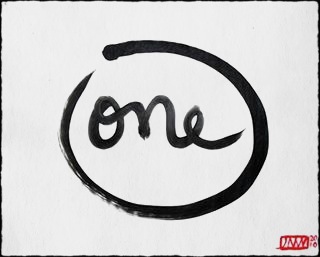
ONEenso

“…the practice, for me, is about creating the kind of resilience or buoyancy where you can be present to bear witness to the truth of suffering.”
~ Roshi Joan Halifax
 
i read this in an interview today. it struck me, stopped me really. … woke me up a bit to this call of warriorship. to be a warrior. and it seems very real to me that to truly be compassionate – which to be true, must include all – takes the heart of a warrior. the courage to BE with pain, to BE with suffering. to BE with it as a witness. the only way to get there is to train, to practice – to just do it.

it is, it seems to me, the courage to recognize that whether in our joy or suffering, we are One. there is no division, no duality. just One.

it is why i practice Buddhism, it is why i still love the teachings of Jesus who aligned himself with the poor and those who were outcasts. it is why i find the words of the current Pope encouraging.

and when it seems impossible to live this Compassion, to live as One, we can take comfort and encouragement in each other as we practice together.

 
~ j

windows (shall we dare?)…

fullwindowmediation

September 11, 2013


…still so present

…still so fresh
after all of these years…


eyes frozen on images, pulling at my heart, calling on my soul to…to what?  jump up?  to hide?  to fight?

this chest heavy, this throat tight – choked with emotion.  this heart trying to hold it all…

the fear, the anger, the grief.


do me a favor will you?

let us sit.  together.  let us sit and invite these emotions to be our friends, our teachers, shall we?

before we act out of turn, let us allow time and space to do their work, for the fear, the anger, and the grief to shed their weight and reveal their gifts.  shall we?

even as the door to our heart begins to close under the overwhelming burden of it all, even as our chests tighten again and our tears freely flow, let us allow a window in our heart to open.

a window for fear, a window for anger, a window for grief. 


shall we dare?


even as we feel fear, we can allow a window in our heart to open to all others who feel fear – fear of loss, fear of age and illness, fear of death…

even as we feel anger, we can allow a window in our heart to open to all others who feel anger – anger at loss, anger at injustice, anger at feeling powerless…
even as we feel grief, we can allow a window in our heart to open to all others who feel grief – grief for loved ones gone, grief for dreams not lived, grief for the mortality of life…


shall we dare?


shall we dare Life, even in the most tragic of circumstances, to reveal Her Beauty?

if we dare to open the windows of our hearts
if we dare to allow such nakedness – such vulnerability
if we dare to open our eyes – to see how we all suffer the same fear, the same anger, the same grief…

then, even as the Lotus growing out of the mud, reaches up revealing Life’s Beauty
we, too, can grow from the darkest and most tragic places in life, revealing that we are also capable of Beauty


shall we dare?


~ j

begin with silence…

 Silent Buddha


Saturday, July 13th 2013


in contemplation. in meditation.
within this sea of emotion where confusion and frustration ebbs and flows so easily
into suffering,
where institutions may fail and people may fall,
i will ride this wave with calm awareness that begins with…
 
silence
 
if i want to see Justice, i must first find it here
– within this heart.
a heart that decided a long time ago to commit itself
to integrity, to openness, to awareness, to kindness, to understanding, to faith, to compassion,
to love, to Life.
 
it is from this heart, our hearts
– hearts committed to forming a nonviolent world with our Love –
that we will tranform hearts and minds, institutions, nations, and the
 
world
 
~ j
 
 
“Perhaps the most important thing we bring to another person is the silence in us, not the sort of silence that is filled with unspoken criticism or hard withdrawal. The sort of silence that is a place of refuge, of rest, of acceptance of s…omeone as they are. We are all hungry for this other silence. It is hard to find. In its presence we can remember something beyond the moment, a strength on which to build a life. Silence is a place of great power and healing.”
~ Rachel Naomi Remen ~

Non-attachment…

ENSO


below are the words i texted a friend who admitted her struggle with “detachment”.  i shared with her a bit of my own journey with this along with some insight of how this has found resonance in my life.  i want to share these thoughts here as well, for you my friends…


Non-attachment

I have had to move away from the word “detachment”. It birthed within
me an emotional reaction akin to indifference or even denial, which
didn’t marry itself well to the aspiration of working for the benefit
of this world, etc. I have found that working with non-attachment as
“letting go” or better yet, as “abiding” meant I could still care –
still be present, but it also left open the possibility that in doing
so I don’t have to be tied to outcomes or adversely affected. I don’t
have to suffer. Anyway, just a few thoughts on my experience
practicing non-attachment.

namaste

~ j

letter for April 15, 2013 ~ I won’t stop loving…

i won't stop loving...
Escondido, CA ~ ©Copyright 2012, Jaysen Matthew Waller

beautiful friends ~

sometimes there are no quick fixes or bandages to salve wounds that have etched their presence into our lives with such striking suddenness.
sometimes all we can do is sit, remember to breathe, and coax the courage to keep our hearts open.
sometimes it is all we can do to pull forth from the ground below and the sky above, with Life itself as our witness, that most valiant and sacred of mantras ~
I won’t stop loving. I won’t stop loving. I won’t stop loving.

namasté
~ j

April 15, 2013

Making Friends with Sadness…

Solidarity Saturday
Saturday, January 26th 2013

PeaceOfferingSmall


sometimes

it is all i can do
to just sit

here in this naked moment

this uneasy
space

my heart broken open

how else can all this Love pour out?


Hmmm….“Making Friends with Sadness.”

You may be asking, “Who would want to do that?!”  And this would be a good and understandable question.  Sadness, like pain and quite a few other uncomfortable aspects of this life, is a thing that we are normally trying to avoid, or escape if caught by it.

Now, to be clear, in this blog entry I am not referring to clinical depression, which is a serious condition that needs professional assistance.  I have had some depression in my own life and have had a number of close friends and family who have suffered from this illness.  Many have benefitted from both therapeutic and medicinal assistance.  And if you are suffering in a way that limits your life, affects your ability to work or function normally, or is causing harm to yourself and those close to you, then please care for yourself enough to seek help.  If you had asthma and were constricted in your ability to breathe, would you not seek help?  Why drown when all around you is shore, wanting to feel your tender feet grounded on its warm sand?  This being said, understanding sadness in the way that I am talking about with this blog entry will, I think in addition to therapy, also benefit those suffering from this illness.

There is a social aspect to this.  Society, particularly a culture built on seeking pleasure and attaining, frowns on sadness and melancholy.  As the sayings go, “Stiff upper lip”, “Pull up your bootstraps”, and “Get back up on the horse.”  Perhaps it isn’t such a bad thing to stay on the ground a bit, laying there – taking it all in, before we get back up on the horse.  Perhaps we can allow ourselves a frown now and then, perhaps we should just take off the boots and let our feet breathe.  Perhaps if we gave ourselves permission to have the experience of feeling sadness, we could do just that – feel sadness, rather than pretending it doesn’t exist or secretly identifying as sad.

If we allow sadness to rise and fall, to live and die, to arrive and pass, then it will do just that rather than burying itself deeper within as we ignore it and hush it away.  I think a lot of our non-clinical or chemically induced depression may lessen or go away if we would allow ourselves to feel sad when life presents sadness.  The Franciscan Richard Rohr quite popularly says, “What we don’t transform, we transmit.”  Allow sadness for what it is, and give yourself – your heart, the opportunity to transform.  Transformed people are awesome people, benefitting the world through their own lives.


The great Tibetan meditation master, Chögyam Trungpa Rinpoche, talks about this practice of opening heart and staying with sadness in the following…

“When you awaken your heart…you find, to your surprise, that your heart is empty.  You find that you are looking into outer space.  What are you, who are you, where is your heart?  If you really look, you won’t find anything tangible and solid.  Of course, you might find something very solid if you have a grudge against someone or you have fallen possessively in love.  But that is not awakened heart.  If you search for awakened heart, if you put your hand through your rib cage and feel for it, there is nothing there except tenderness.  You feel sore and soft, and if you open your eyes to the rest of the world, you feel tremendous sadness.  This kind of sadness doesn’t come from being mistreated.  You don’t feel sad because someone has insulted you or because you feel impoverished.  Rather, this experience of sadness is unconditioned.  It occurs because your heart is completely exposed.  There is no skin or tissue covering it; it is pure raw meat.  Even if a tiny mosquito lands on it, you feel so touched.  Your experience is raw and tender and so personal.  It is this tender heart of a warrior that has the power to heal the world.”

~ Chögyam Trungpa Rinpoche
(Shambhala: The Sacred Path of the Warrior)

Likewise, one of my favorite teachers and one of Rinpoche’s foremost students, Pema Chödrön, says it like so…

“Sometimes the completely open heart and mind of bodhichitta is called the soft spot, a place as vulnerable and tender as an open wound. It is equated, in part, with our ability to love….Sometimes this broken heart gives birth to anxiety and panic, sometimes to anger, resentment, and blame. But under the hardness of that armor there is the tenderness of genuine sadness. This is our link with all those who have ever loved. This genuine heart of sadness can teach us great compassion. It can humble us when we’re arrogant and soften us when we are unkind. It awakens us when we prefer to sleep and pierces through our indifference. This continual ache of the heart is a blessing that when accepted fully can be shared with all.”

~ Pema Chödrön
(When Things Fall Apart: Heart Advice for Difficult Times)

This is, I believe, the heart of Jesus as when he said, “O Jerusalem, Jerusalem, you who kill the prophets and stone those sent to you, how often I have longed to gather your children together, as a hen gathers her chicks under her wings…” (Matthew 23:37)  So often we have been Jerusalem ourselves, so often we have been deaf to such wisdom, closed to such love, blind to a heart capable of holding the entire world and its pain – ours included.

We can sit and “meditate” all we want.  We can wear as many WWJD Bracelets as we can fit on our arm (for those who don’t know, WWJD is short for the phrase – What Would Jesus Do?).  But unless we are willing to open our hearts to sadness, ours and others, to face it and allow space for it, to care for it with gentleness and compassion – unless we are willing to be this brave, then we will continue to suffer.  We cannot avoid sadness, just as we cannot avoid pain.  But like pain, if we continue to work at evading sadness, because it makes us uncomfortable, then we will live a life not whole – a life incomplete.  Surely if we are to know joy and abundance fully, then we must also know sadness and loss.  Life is both.  Love holds both.

So we practice and we learn to live with sadness as we live with joy, knowing that both are a part of the whole.  Gaining insight that both serve as teachers as we continue to expand our hearts’ capacity to hold this entire world with compassion, but also the wisdom of mind to let go.  It is not that we should hold onto sadness, grasping.  We should simply allow it and then let it go on its way.  It may seem in the moment that it never will leave, but we simply breathe with it.  Breathing in, we say to ourselves “so this is sadness”.  We sense how it feels in our body, where it rests.  Is our chest heavy?  Is our throat tight?  Do we feel pressure in our eyes or queasy in our stomach?  It is important to recognize the reality of what we are feeling.  However, rather than getting caught up in these feelings, we simply label them.  “This is sadness, this is how sadness feels.”  We are that which is observing.  We are not the sadness, we are not the storyline.  We are watching it as it happens.

And something amazing happens as we make friends and peace with this sadness rather than ignoring it or fighting it…it eventually lessens and loses its overwhelming grip.  And another miraculous thing happens.  As we feel this sadness in our bodies and recognize it, we realize that this is how other people feel.  This is what other people are experiencing…loss, pain, sadness.  And this sadness that has pulled us from life has now given us a great gift – awareness.  We are now aware that we all share in this sadness and knowing how it feels – the heavy chest, the eyes ready to burst, the stomach flipped over, and the throat tight – we wish everyone to be free of such suffering, wishing no one to have to go through this.  That wish for no one to go through such suffering is, as Pema says above, bodhicitta.  And perhaps after feeling this wish to have no one suffer as we have, we begin to work to end this suffering not only for ourselves, but for others.  This is what it is to be a bodhisattva.  This is what it is to be a peacemaker. This is what it is to be a healer.  This is what it is to be truly YOU.

And this isn’t all gloomy.  Transformed people, those who have faced their sadness, often with their wisdom have a great sense of humor and the heartiest of laughs.  The Dalai Lama comes to mind along with two of my favorite comedians – George Carlin and Ellen DeGeneres.

Being you means feeling happiness at times and sadness in others.  This is the joy and fullness of our life – to be whole.  With this appreciation, with this awareness, we are capable of laughing and crying fully and completely with all who have come before and all who will come after.

One laughing, one crying.  One joy and one sadness.

Namasté


For more reading on this Solidarity Thursday topic, please check out these wonderful blogs: Ben at The Horizontalist, Esther at Church in the Canyon, and with a unique perspective, Triskaidekapod.

A Return to Nature as Sacrament…

Solidarity Thursdays
Thursday, January 10th 2013

“You are sitting on the earth and you realize that this earth deserves you and you deserve this earth. You are there—fully, personally, genuinely.”
~ Chögyam Trungpa Rinpoche

For the majority of my childhood, I grew up in Valley Center, California.  It is a rural town in the northeast of San Diego County.  If I had to pick one thing to be thankful for, from my childhood, it would be this – that I had the opportunity to fall in love with nature at such an early age.

Even as I write this, I feel moved to express my gratitude to my parents, yet again.  What a gift it was to fill my days with hands in dirt, running through fields, sitting and watching lizards, insects, and squirrels. I was given the freedom to just sit – listening to birds in song and the wind dancing through the great oak trees.  These early experiences began in me a journey of appreciation, respect, and love of nature and this tiny blue planet we call home.  It was in these early experiences that I began to see the sacred, the divine.  If philosophy is in the head, then Spirituality is in the heart – it is experiential.  And for me, the most spiritual experiences I have had have been in the presence of nature.  Nature, has for me, been a Sacrament.  A window into what is Sacred, what is Divine.

I miss the days when I allowed myself such freedom.  At times I long for the great oak trees, their strength, their music.  So much so, that when shopping or running errands, I even find myself subconsciously picking the parking space with the tree, if there is one, rather than not. I long for these experiences for my nephews and niece.  “Play outside” I remind them, maybe too often, because I know that love grows in experience and in time and space.

Don’t get me wrong, I am grateful – very grateful for technology in all of its embodiments.  I use my iPhone, maybe too often (it’s sooooo wonderful!)  I know that much of my life is dependent on computers, that I enjoy computers (they are sooooo wonderful!)  But they don’t inspire my heart to sing, my hands to open – to reach out, my feet to dance, or that deep breath that I instinctively know to take when I see a vast blue sky.  I like technology.  But I love nature.

So I worry a bit, for my nephews and niece.  Though, they too have a fondness for nature (especially the oldest), as long as they’ve known nature they have also known video games, iPods, and DVD players.  Nature has so much competition.  And although it is certain that all of this technology has benefitted humankind in a myriad of ways, there has been a cost – a shadow side to this great revolution.

We have in a way been distanced from nature, in very real, tangible ways.  We have been distanced not only in geography as we use up land for resource and move closer to cities for work.  But also in our psychology as so much of the resources nature provides are manufactured, packaged and then put on a shelf for us before we consume.  This applies to almost all we purchase in the West, from materials to food.  There is a distance, a disconnect that develops with a life thus lived.  We forget how deeply we are connected to nature, when are so far away that we don’t see the source of what we consume, we just know the store names.  We have even manipulated our religious practices, perhaps unknowingly – conveniently, in such a way to support this disconnect.
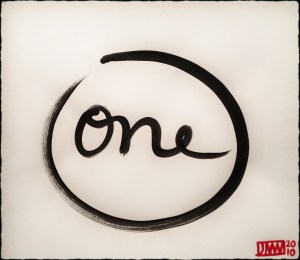
ONE2010

“The entire cosmos is a cooperative. The sun, the moon, and the stars live together as a cooperative. The same is true for humans and animals, trees, and the Earth. When we realize that the world is a mutual, interdependent, cooperative enterprise — then we can build a noble environment. If our lives are not based on this truth, then we shall perish.”
~ Buddhadasa Bhikkhu
 

“…then we shall perish…”   

This isn’t a judgment, it is our reality.  If we are of nature, if nature is where life is to be found – then as we are distanced from nature, we are distanced from life.  I see this not only in our environmental changes, but also in our psychology – our increased anxieties and depression.  Not that playing in dirt will end all anxieties and depression, but feeling connected and whole would – I believe – go a long way in healing many of our wounds.  In my experience, being close to nature has been a grounding force in my life.  And as we find ourselves grounded in nature, we find ourselves connected to all life.  To paraphrase Neil Degrasse Tyson – we are connected to each other biologically, to the Earth chemically, and to the entire Universe atomically. 

I think there is great reason for hope, when contemplating our future.  For one thing, the Earth and nature itself is supportive of Life.  The Earth has seen a lot of destruction and extinction of many species, even as it has also promoted healing from such destruction and supported the evolution of new species.  The Earth and life on it, most likely, will go on.  But will we?  If we begin to see ourselves not only as consumers and benefactors of the Earth, but as partners and co-creators with the Earth, with nature – then yes, I think we will.

And this is why I see reason to hope.  Even as over time, we have strayed away from the connected – grounded practices of indigenous and native culture, and from the ancient earth/nature-based spiritual traditions, there is now a resurgence and the beginnings of such awareness and (I believe) a rich desire to reconnect.

I believe we are beginning a new age, a return to nature as Sacrament.  I see it in the new movement of integrated contemplative Christianity (which is, perhaps, actually a return to a more original – less corporate Christianity) and also in Engaged Buddhism, a term of which Thich Nhat Hanh has said, “was created to restore the true meaning of Buddhism.”  And perhaps, our brothers and sisters from the indigenous, native and nature-based spiritualities will lead the way.  I think those of us not from these traditions, would do well to listen and learn from their reverence for and relationship with nature.

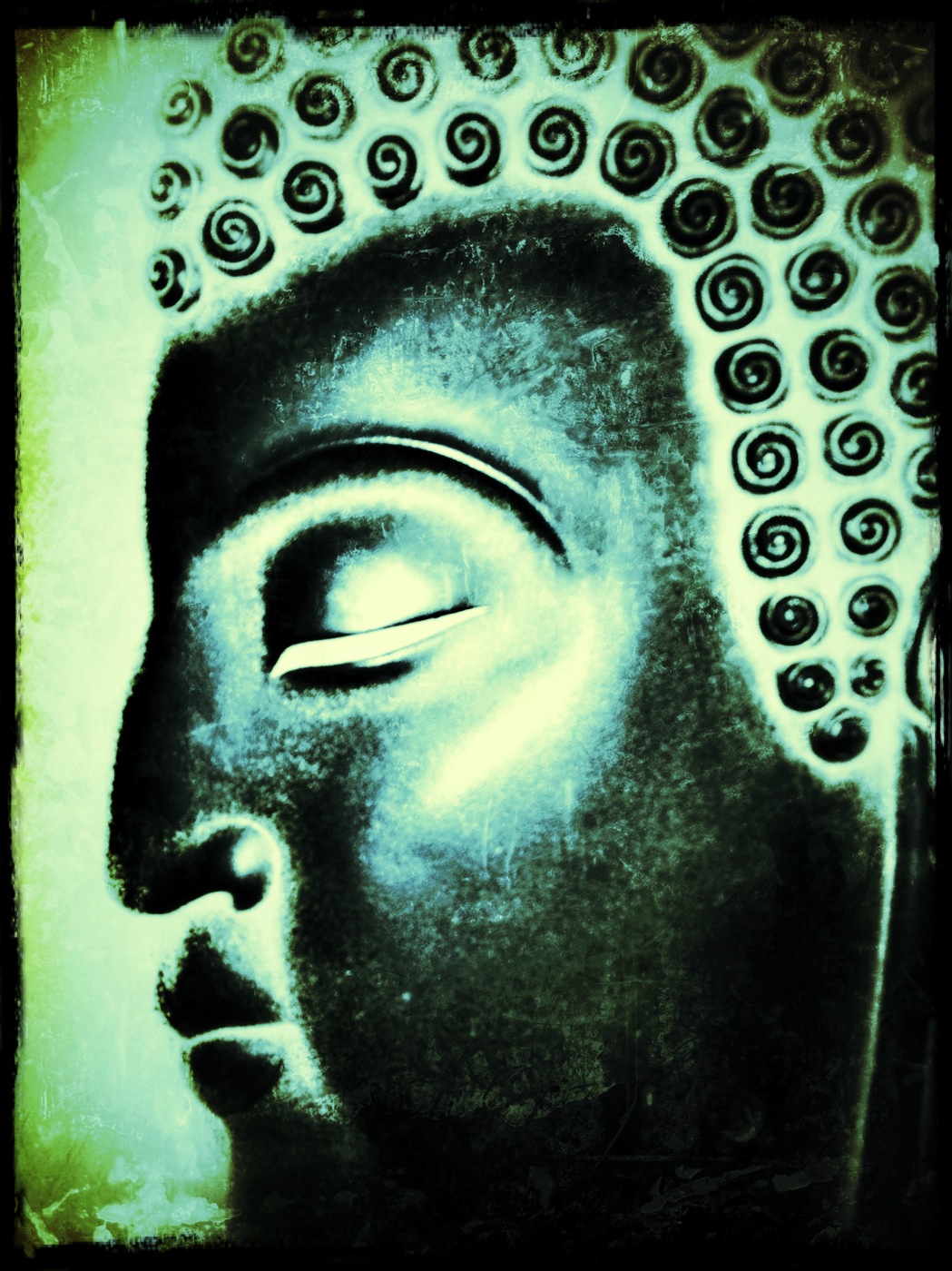
BuddhaWitness

One of the most iconic images of The Buddha, is of him sitting under the bodhi tree, his left hand palm up on his lap, his right hand touching the Earth.  It is said that on the night of Siddhartha Gautama’s enlightenment and realization of being The Buddha, he was attacked by the demon, Mara.  Mara, proud and jealous, challenged Siddhartha’s right to sit there, claiming enlightenment to be his.  Mara’s soldiers shouted out, bearing witness to Mara’s great accomplishments and right to be there.  When Mara then asked Siddhartha, “Who bears witness for you?”  Siddhartha sitting there, calm and grounded, reached out with his right hand and touched the Earth, at which point the Earth itself answered, “I bear witness.”  It is at this point that Mara disappears and as the morning star rose in the sky, Siddhartha realized his enlightenment and becomes The Buddha.

The Earth has indeed been bearing witness for us, for all life, as long as it has existed.  It is now, perhaps, our time to return the favor.  It is our time to return to nature as Sacrament.  And it is up to each of us to find the practice that best helps us to do so.

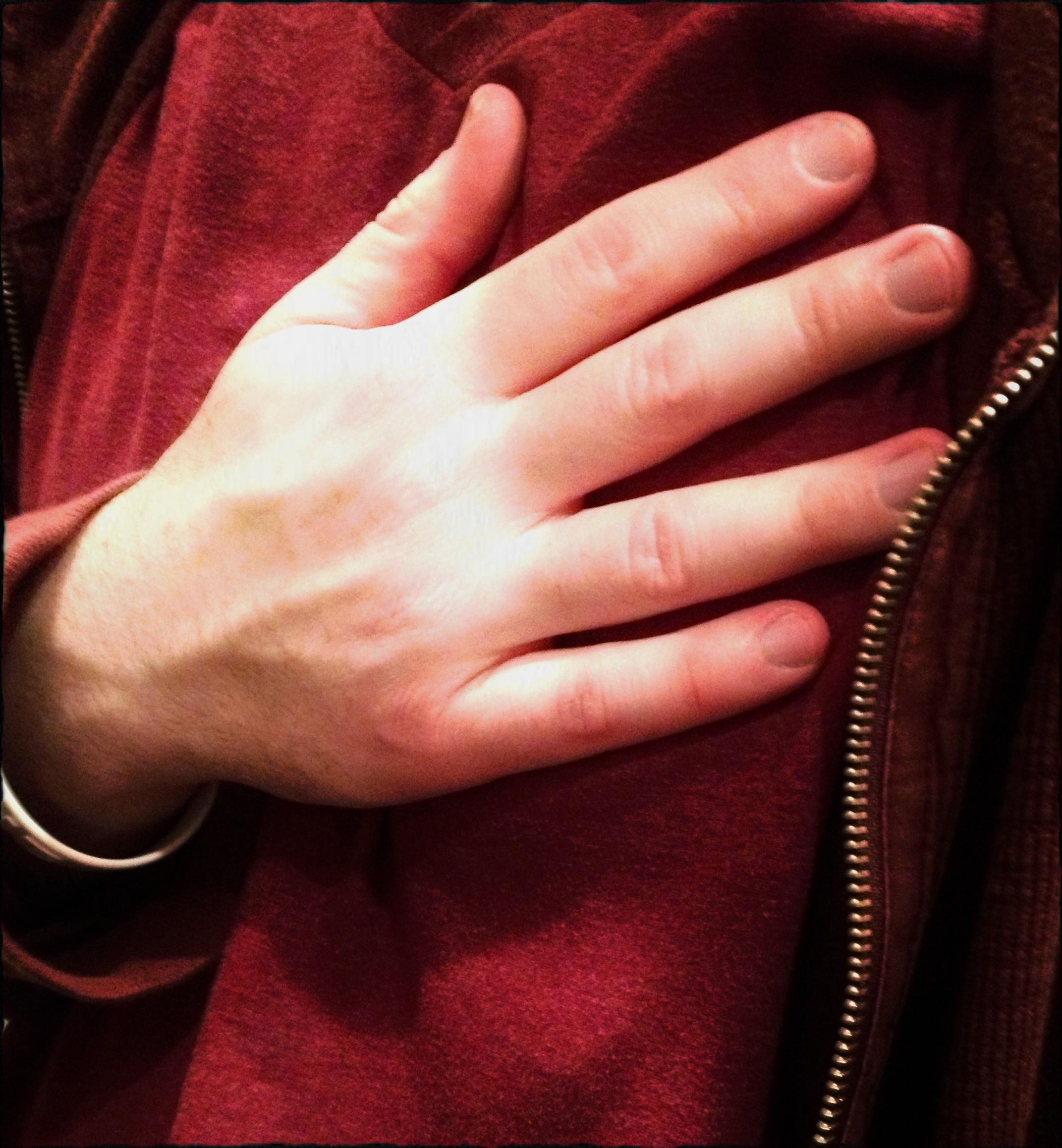
I have a practice I do every morning as part of my meditation.  It is a practice I do to realign myself – to remind myself of my connection to all Life.  I use the mantra “Om Shanti Shanti Shanti Om”.  Om is said to be the primordial sound of Life itself and Shanti means “peace”.  Sitting, I place both hands on my heart.   I allow myself to feel my heart beating as I breathe in and breathe out.  I then while breathing in, with both hands over my heart, say in my mind, “Om”.  In between the breath, I say in my mind, “Shanti Shanti Shanti”. As the breath leaves my body, I say in my mind again, “Om”.  I repeat this with one hand on my heart and one hand touching the Earth.  I then repeat it a third time with one hand on my heart and one hand resting in space.

HeartBless          EarthBless          SpaceBless

I then end this practice with hands together, as I bow my head in reverence and gratitude to Life.  I have started my day establishing first, a wish for peace within my own heart, that I may have peace and be an instrument of peace for the world.  Then a wish for peace to all who share this ground, this Earth with me.  And then a wish for peace to all who breathe this same air and share this same space with me.  And finally a bow to ALL of it.  Then as I go about my day, I try to recognize the Divine in all I see, greeting Nature as a relative rather than stranger, as part of me rather than an other, as Brother Sun and Sister Moon, as St. Francis would say.

I think it is imperative that we all find a way to do this.  Not only is it necessary for our survival, it is necessary for knowing who we are.  So when out and about take some time to sit and watch the ocean, to lay in some grass watching clouds move across the sky, look out at the vast canopy of night – dotted with light as you hold your lover’s hand, to hug a tree, or talk to ants marching.  Connecting with Nature is connecting with You.

Namasté

For more reading on this Solidarity Thursday topic, please check out these wonderful blogs: Ben at The Horizontalist, Esther at Church in the Canyon, and with a unique perspective, Triskaidekapod.

saying “yes”…

Solidarity Thursdays
Thursday, January 3rd 2013

saying “yes”…

YesEnso

Happy New Year friends and welcome to my first blog for 2013 and the first coordinated blog of 2013 as part of our continuing series, Solidarity Thursdays.  I continue to be grateful for the opportunity to share space with Ben, Esther, and Zachary.

This week’s blog topic, appropriately, is “New Beginnings”.  Ironically, I have had quite a bit of difficulty…beginning.

You see, I find myself – my heart and mind – still bound up in 2012, at least where it has bled into 2013.  Try as I might, sitting in meditation, chanting “let go, let go”, I have discovered that even as I sit on that cushion I am harboring anger, frustration, and sadness over recent events.  I am grieving in empathy with the families of the numerous children so tragically taken from life.  I am grieving the ever increasing reaction we have to greet such horrific violence, with preparation to impart even more violence as a means to end violence.  And in this, I am not speaking of the families who were directly affected.  I would expect and understand such a reaction from such pain and suffering.  Ironically, most victims are not calling for what is being set forth.  A peripheral audience of opportunists, along with those guided by fear seems to be framing the discussion. I am grieving that politics can seemingly – so callously – ignore violence towards women or victims of Hurricane Sandy by not renewing The Violence Against Women Act or securing funds for these destitute people still without homes, still without assistance so long after the event.  I am grieving for our over-consumption of resources resulting in an increasingly fragile environment and increasing poor.  I am grieving that there is such continued imbalance of power, not through legitimate means, but instead through manipulation and dishonesty.  I am grieving that this is so often a cause for celebration, rather than a wake up call to compassionate change.

And in this grieving and attachment, I feel disconnected.  I feel disconnected to this world, where life is seen as so fragmented – where people entertain the idea of the “other” – where violence is seen as normal and in some cases even morally right and even a “necessary evil” – where for a matter of convenience we can look the other way, even as so many unnecessarily starve to death.  I grieve that I have played a part in this just as anyone else has.  I grieve, because Life itself is grieving. I grieve, because I am, indeed, connected to this world.  I grieve, because I so love the people in this world.  I grieve, because I long for people to stop and remember their nobility, their Divine Heritage as children of God, of Life, of Love – however you want to define or frame it.  We are better than the violence, we are better than the overconsumption, we are better than the indifference, and we are better than fear.

I remember, I read quite some time ago when I began my meditation practice – specifically Metta, or loving-kindness meditation and with it a practice called Tonglen – that it isn’t unusual for a practitioner to become more aware and in touch with sadness…because even in its joy and beauty, life is always tinged with what I would call a sacred sadness.  It isn’t just in Buddhism where this is recognized, just look to the artwork of Christianity where Jesus is depicted pointing to his exposed and Sacred Heart.  Or even to the story of the crucifixion itself, where it is implied that it wasn’t just the wounds but the great burden of carrying within himself the brokenness of life that extinguished his.  Loving until the heart itself breaks.  As our heart opens to the world, we begin to see and connect to the pain of the world – pain we have participated in and pain we have been victims of.  This coming of age to pain, this befriending of sadness, is an opportunity for compassion.

So I sat on the meditation cushion this very day, my breath interrupted by the thoughts listed above.  I sat, with my heart heavy, my emotions ready and raw.  And all I could do was what my practice continues to teach, what the Buddha taught 2500 years ago, and what Jesus encouraged with every person he encountered – begin anew.  Beginning anew – coming back to my breathing, connecting my mind with my body, and in doing so reminding myself to live as a Whole being, a being of compassion, a partner to Life, a child of Love.

And I was reminded what it means to begin anew.  It is our way of saying “yes” to Life with our life.  It is our way of aligning ourselves with Life itself, of saying we are not separate, rather we are partners.  It is our way of living Love, of acting with compassion.

It is a given that we need Life…but have you ever thought that Life, in fact, needs you?  That this may bring meaning to why you are still breathing?  That this may bring inspiration and motivation to why you are still here, to say in continuance – Yes, yes, and again, yes.

YESensos

We fall, we rise.  This is the pattern.  The New Year is a wonderful way to ritualize this, but then again, so is each breath that we take.

May this New Year be blessed with many new beginnings as our hearts continue to open to Life and in service to compassion.  Here is the blessing I shared on Facebook for New Years, may it be so:

“May you know your own beauty and sacredness just as you are. May you feel understood and valued. May you continue to learn, grow and open to all of what Life offers you. May you still experience peace when troubled, healing when wounded, patience when angered, and joy after sadness. And most of all, may you know that you are loved.”

Namasté

For more reading on this Solidarity Thursday topic, please check out these wonderful blogs: Ben at The Horizontalist, Esther at Church in the Canyon, and with a unique perspective, Triskaidekapod.